The wildlife was already here. The project simply gave it a place to be seen.
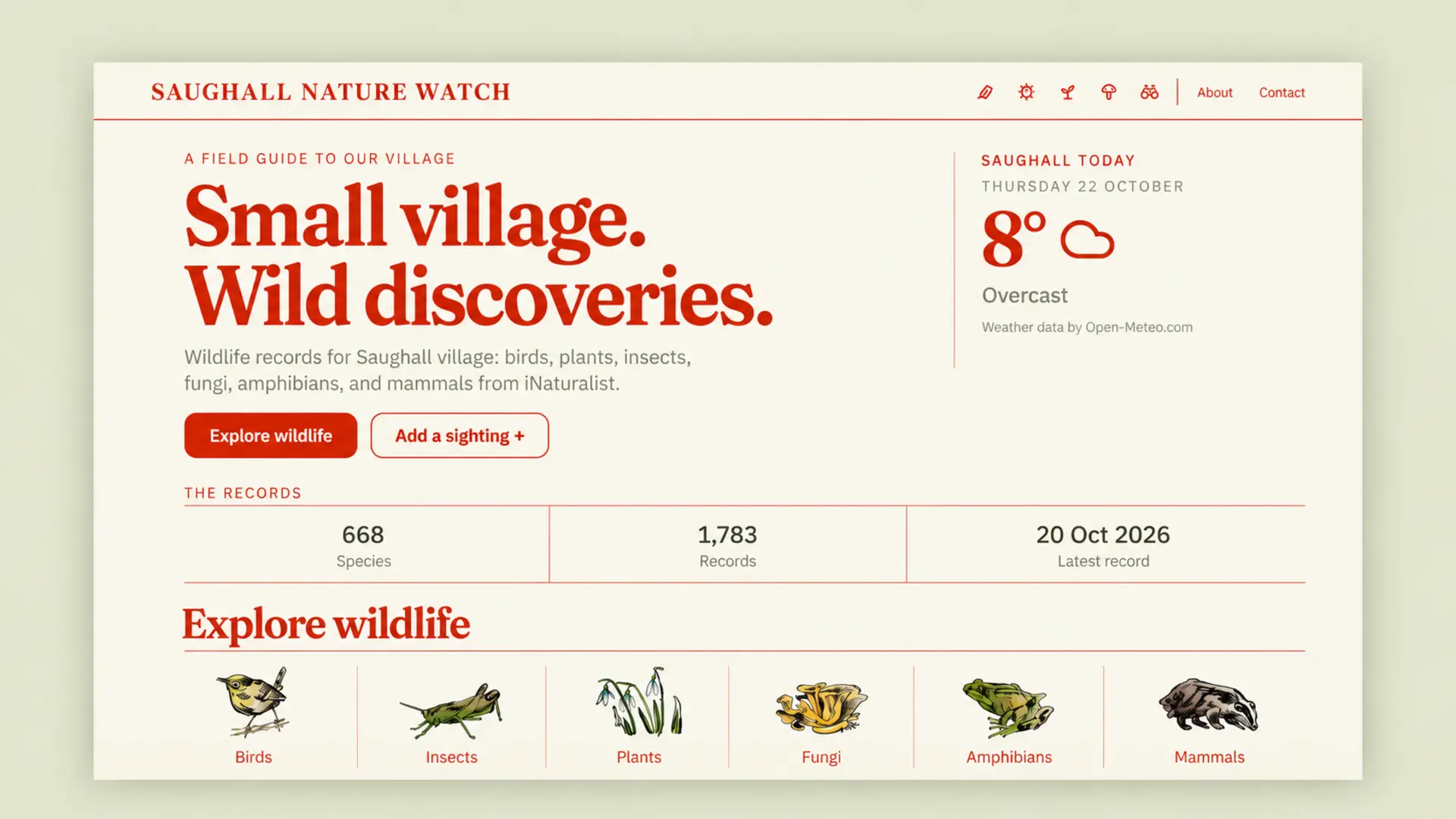
Saughall Nature Watch brings together wildlife observations from across Saughall and Shotwick Park, creating a shared record of the species found throughout the village and its surrounding landscape.
The project began with a curiosity about the iNaturalist API and a growing habit of recording local wildlife. It became a way to celebrate the richness of the place we live and make those observations easier for other people to discover.
Together, individual sightings begin to reveal a bigger picture: the variety of wildlife recorded in familiar places, and the discoveries we might otherwise pass by.
A record of place
Every observation captures a single moment. Collected together, they become a portrait of a place.
The website organises observations by wildlife group, highlights the species recorded most often and brings recent discoveries into view. Whether someone records a familiar bird or an unusual moth, their sighting contributes to a growing account of the wildlife living alongside us.
The archive draws on public iNaturalist observations within the geographic boundary. It gives everyday species the same care as unexpected discoveries, encouraging people to look more closely at the places they pass each day.
Warmth, colour and character
The visual direction celebrates the vibrancy already present in the wildlife, using a bright, warm palette to make the information feel inviting.
The aim was to capture something of a walk through the fields during magic hour: familiar, glowing and full of the possibility that something new might be waiting to be noticed.
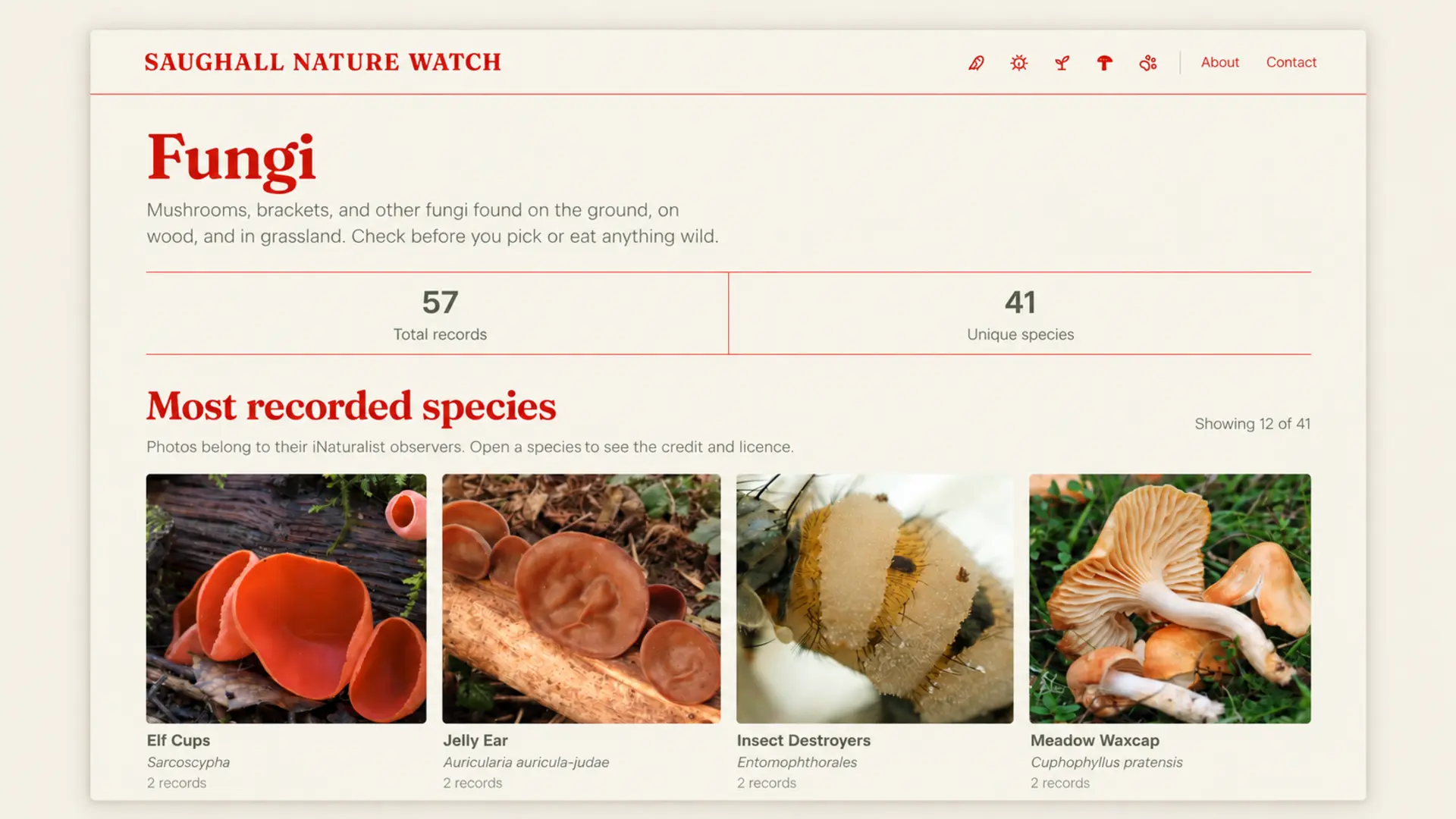
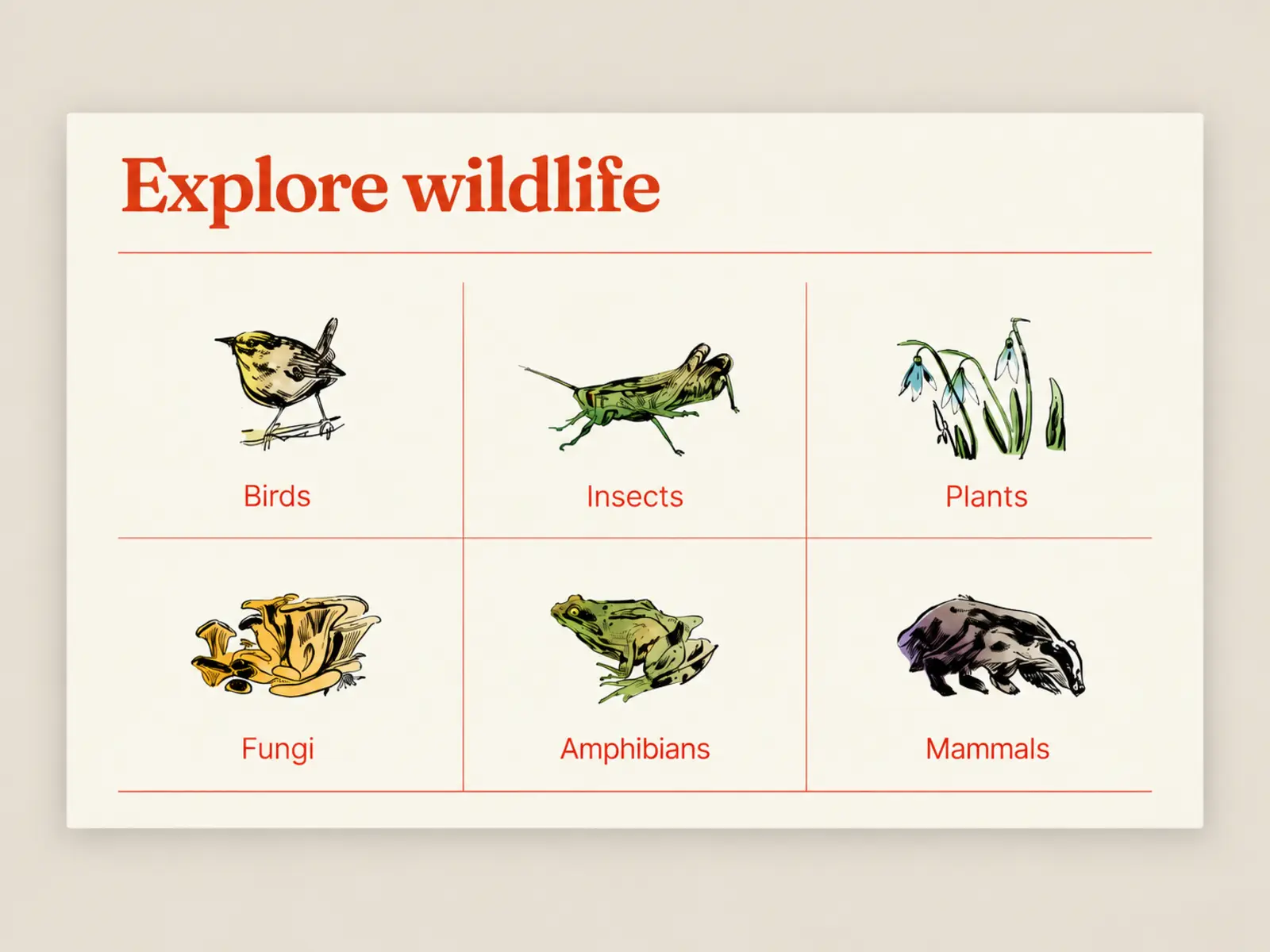
Wildlife photography documents what has been found. Illustrations commissioned from Millie Chesters introduce each category with a different kind of character, helping the site feel somewhere between a field guide and a local publication.
Clear typography and repeated layouts give the records structure, while the illustrations soften the information-rich pages without competing with the observations themselves.
Turning observations into an interface
I designed and developed the site using React, Next.js and TypeScript, integrating the iNaturalist API to give a wider collection of records a local focus.
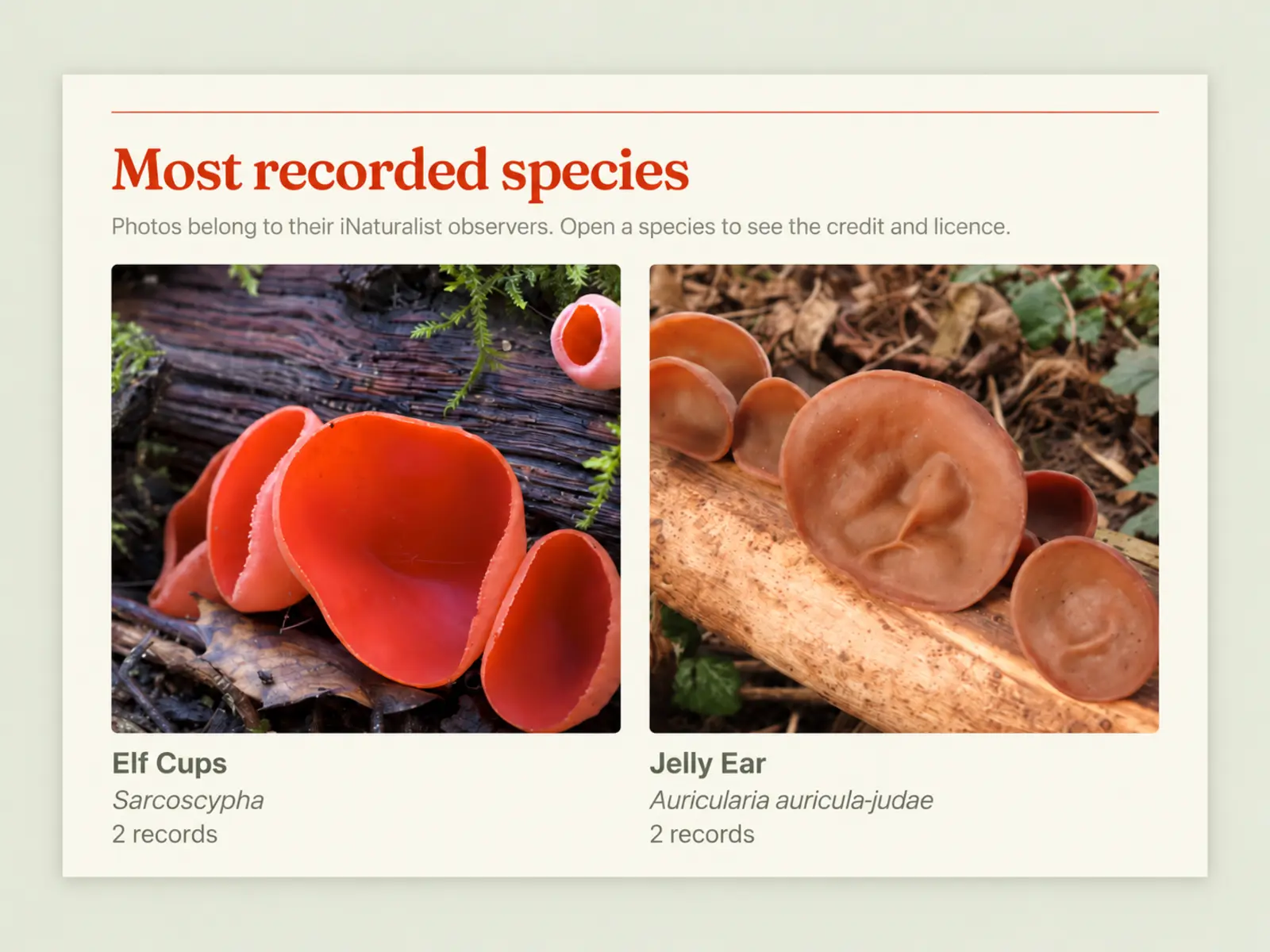
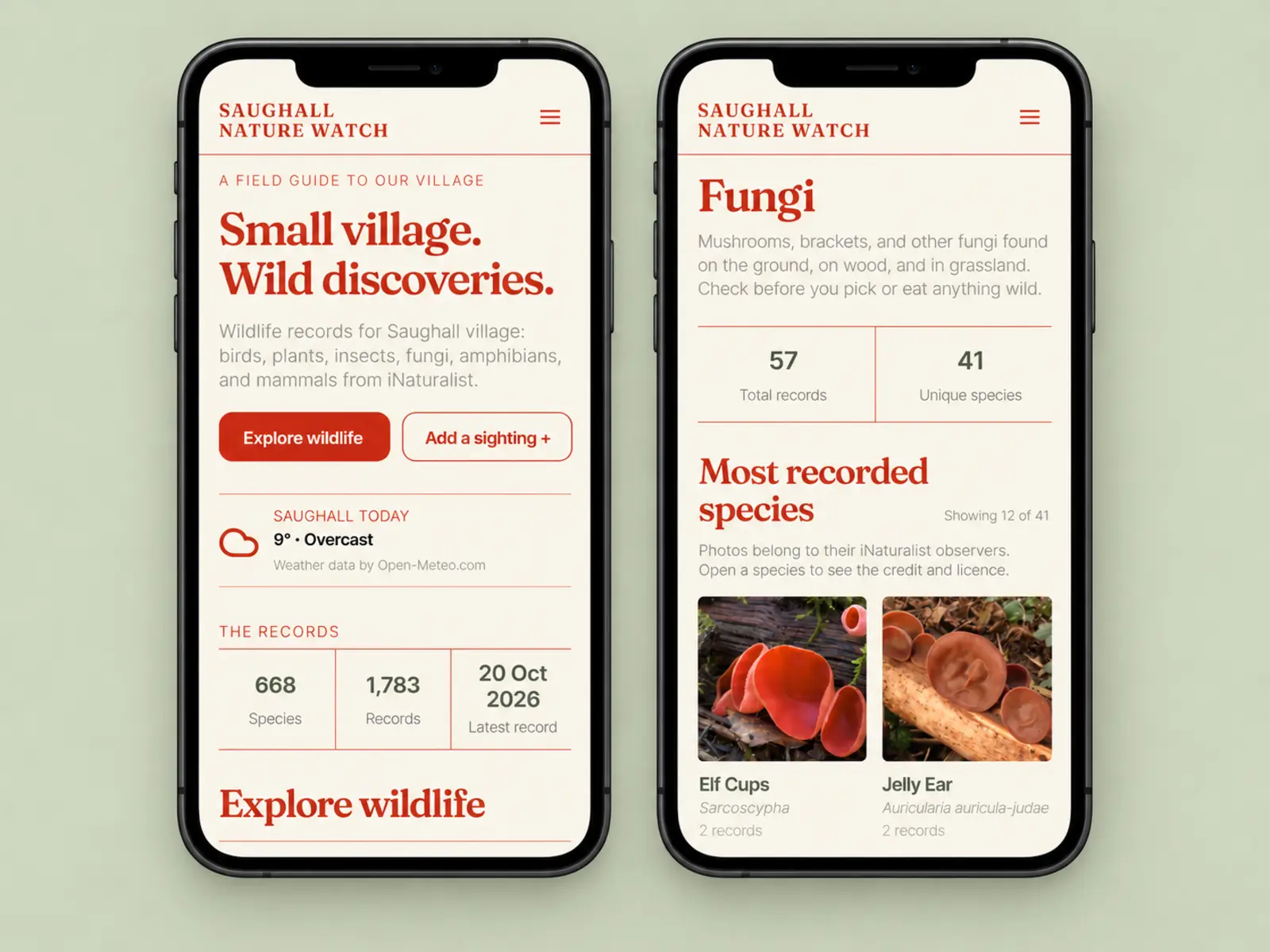
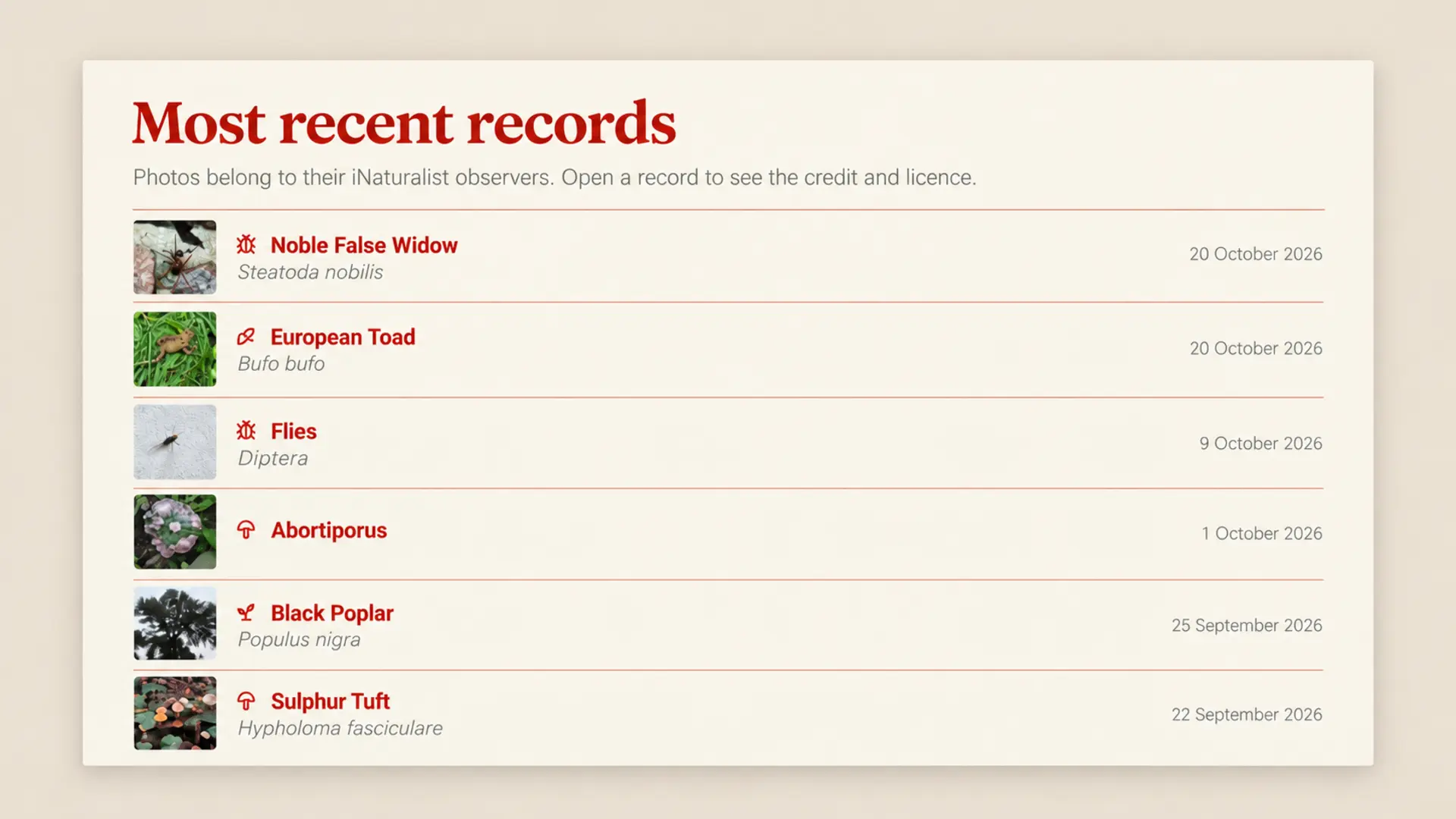
The central task was deciding how to make those records useful to someone browsing. Category overviews provide a starting point; species lists help visitors explore what has been found; recent observations show what has been recorded lately.
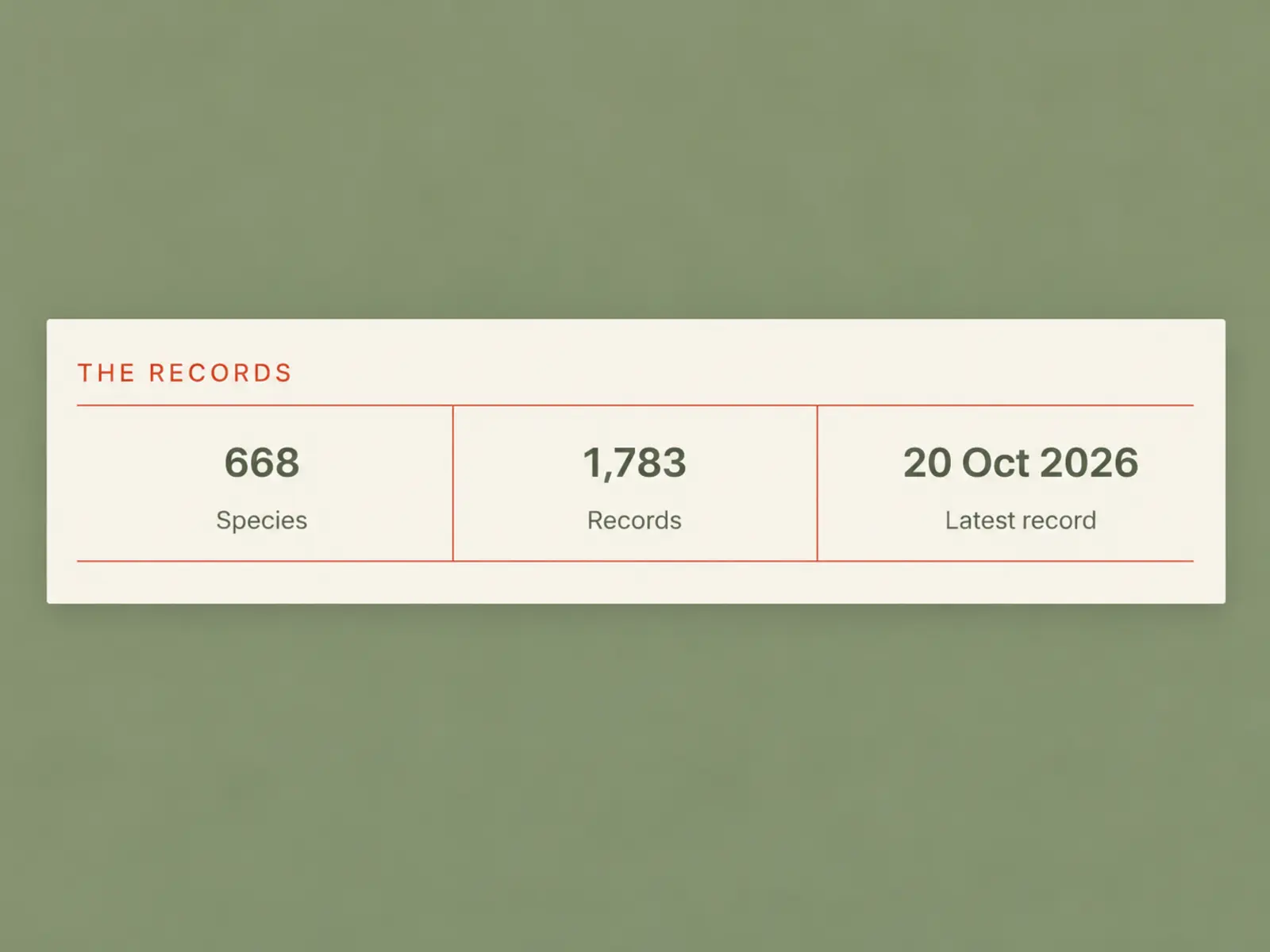
Record totals and species counts are presented separately because they describe different things: how many observations have been made, and how many distinct species have been recorded. Keeping that distinction clear helps visitors read the information without needing to understand the underlying data structure.
The interface carries the same hierarchy into smaller screens, keeping the illustrations, photographs and supporting information connected as the layout changes.
Designed to be revisited
New observations give people a reason to return and see what has recently been found around the village. Frequently recorded species offer a broader view, while the latest records keep the experience changing over time.
Visitors can move between categories, species and recent observations simply to see where their interest takes them. It is a small, ongoing invitation to stay curious about the place around us.
Why it matters
The fields, hedgerows and woodland around Saughall and Shotwick Park are part of what makes this place feel like home.
Local concerns about the future of nearby green-belt land give that familiarity another significance. Documenting the wildlife already here helps make its presence visible and gives people something tangible to explore and value.
The archive is a record of what people have observed. Its contribution is to bring those observations together, helping tell the story of a landscape that can be easy to take for granted.
Reflection
Saughall Nature Watch began as a technical experiment and changed the way I think about community websites.
Connecting the records, shaping the interface and commissioning the illustrations were all parts of the same task: making local knowledge easier to discover and worth spending time with.
Seeing individual observations become a shared archive has been the most rewarding outcome. The site continues to grow through the curiosity of the people recording what they find.
Wildlife observations and photography are supplied through iNaturalist, with individual observer and photographer credits available in the source records.