A painting became a place by asking what lay beyond the frame.
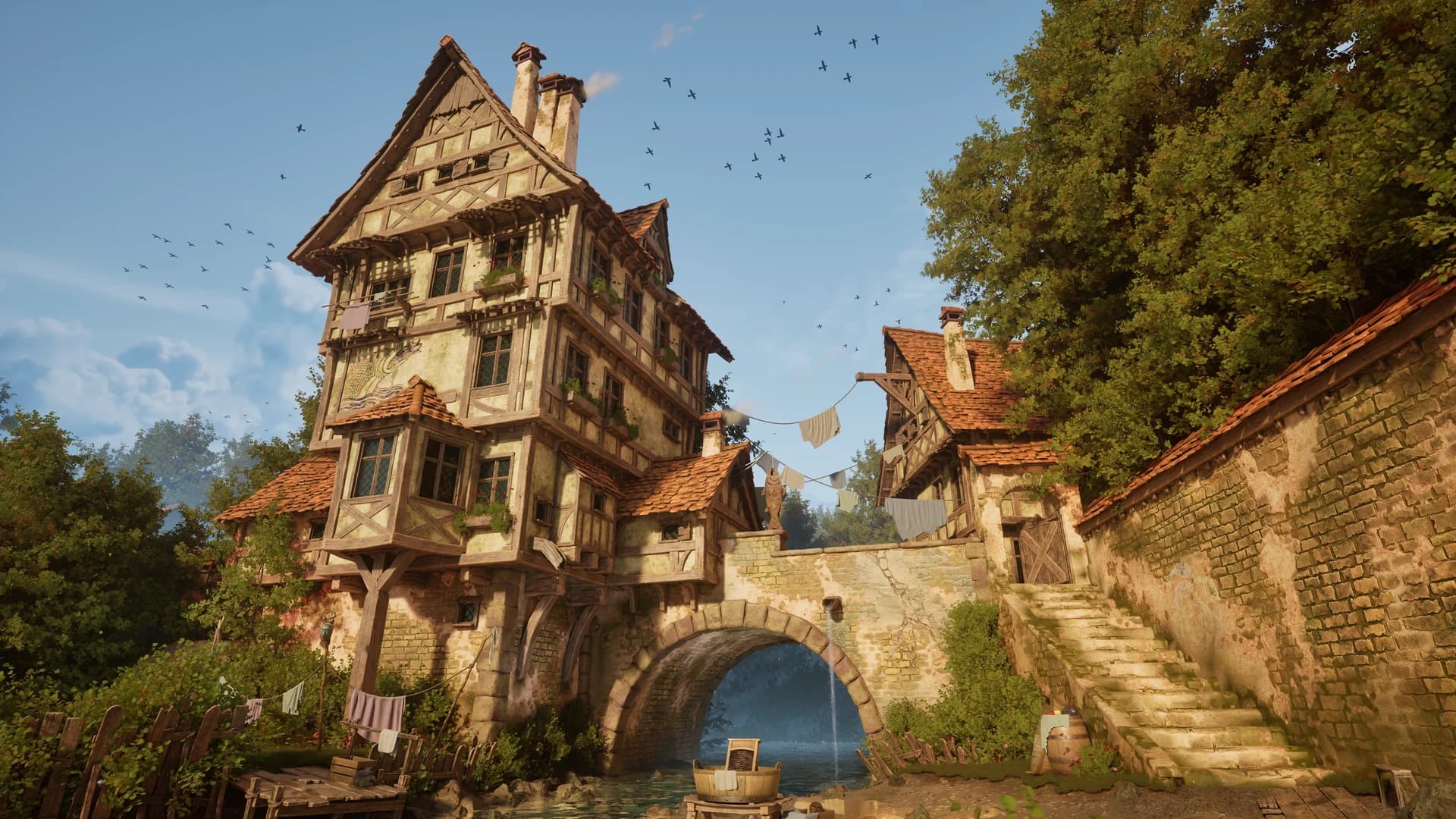
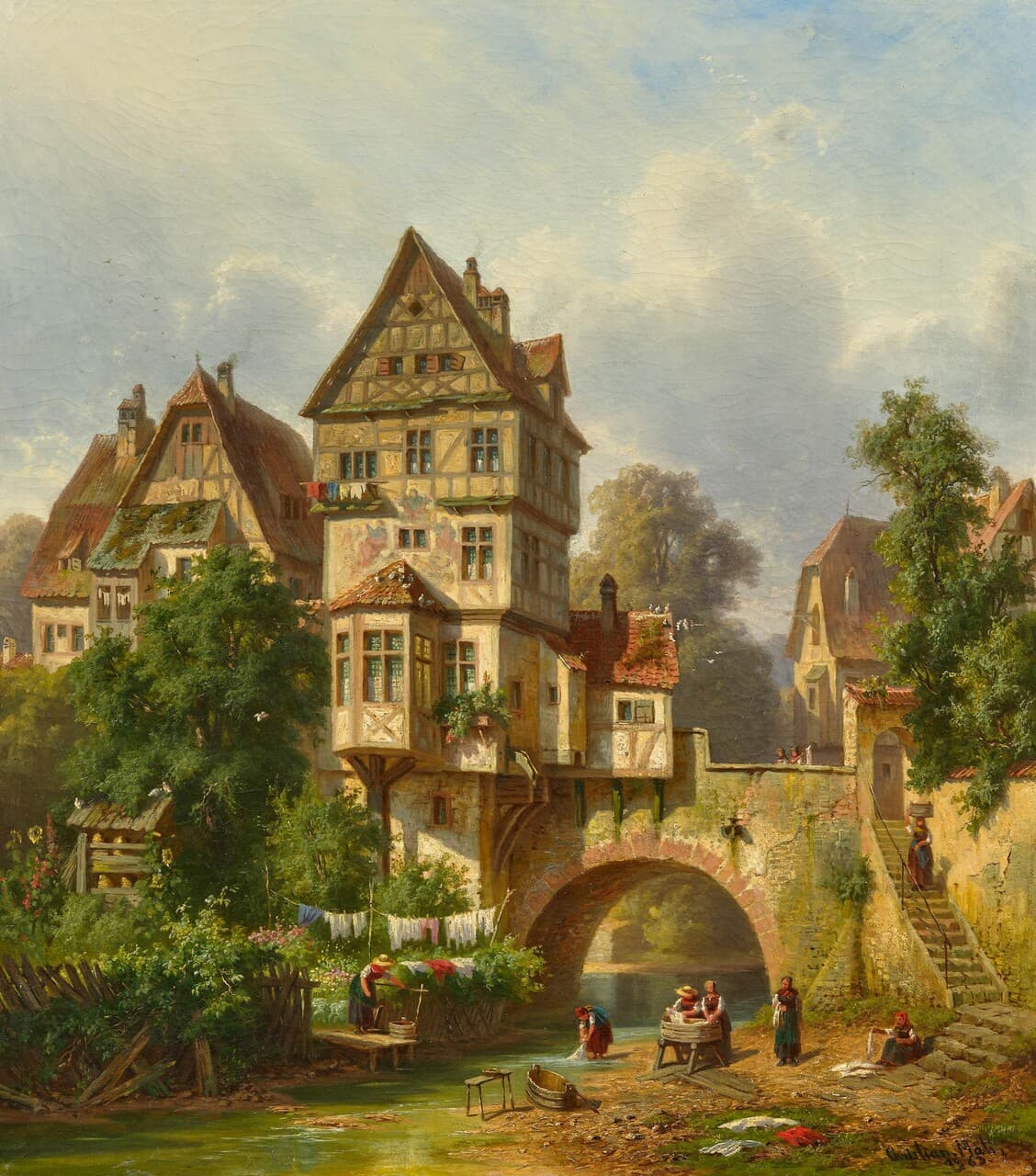
Laundry Day is a reinterpretation of Christian Friedrich Mali's Laundry Day at the City Wall, translating a single painted moment into a fully realised environment.
The original depicts a Swabian village in southern Germany in the mid-1800s, with townsfolk washing laundry on a peaceful day. Rather than recreating it exactly, the project expands on its atmosphere, imagining the spaces beyond the frame while preserving its quiet, everyday character.
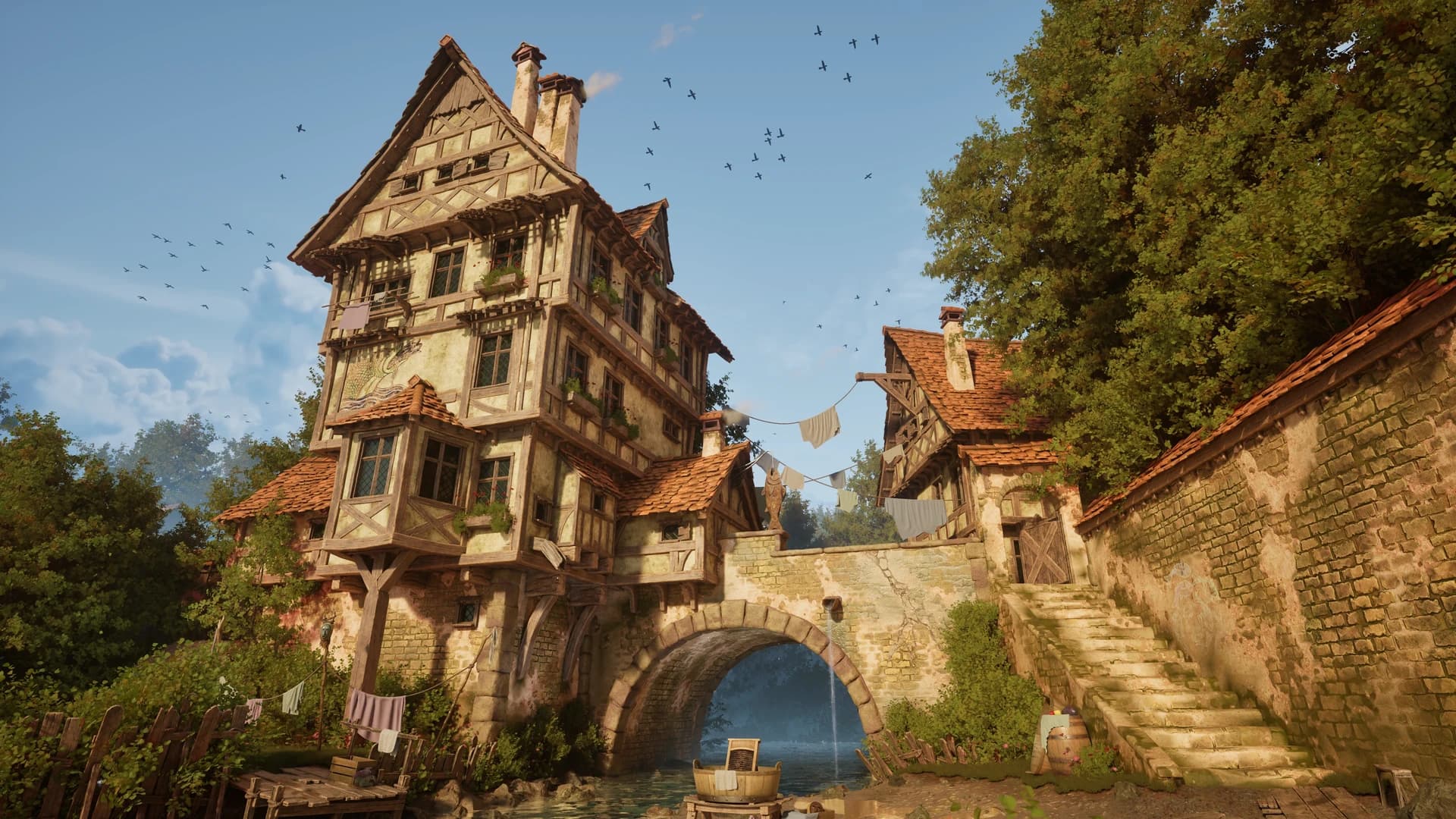
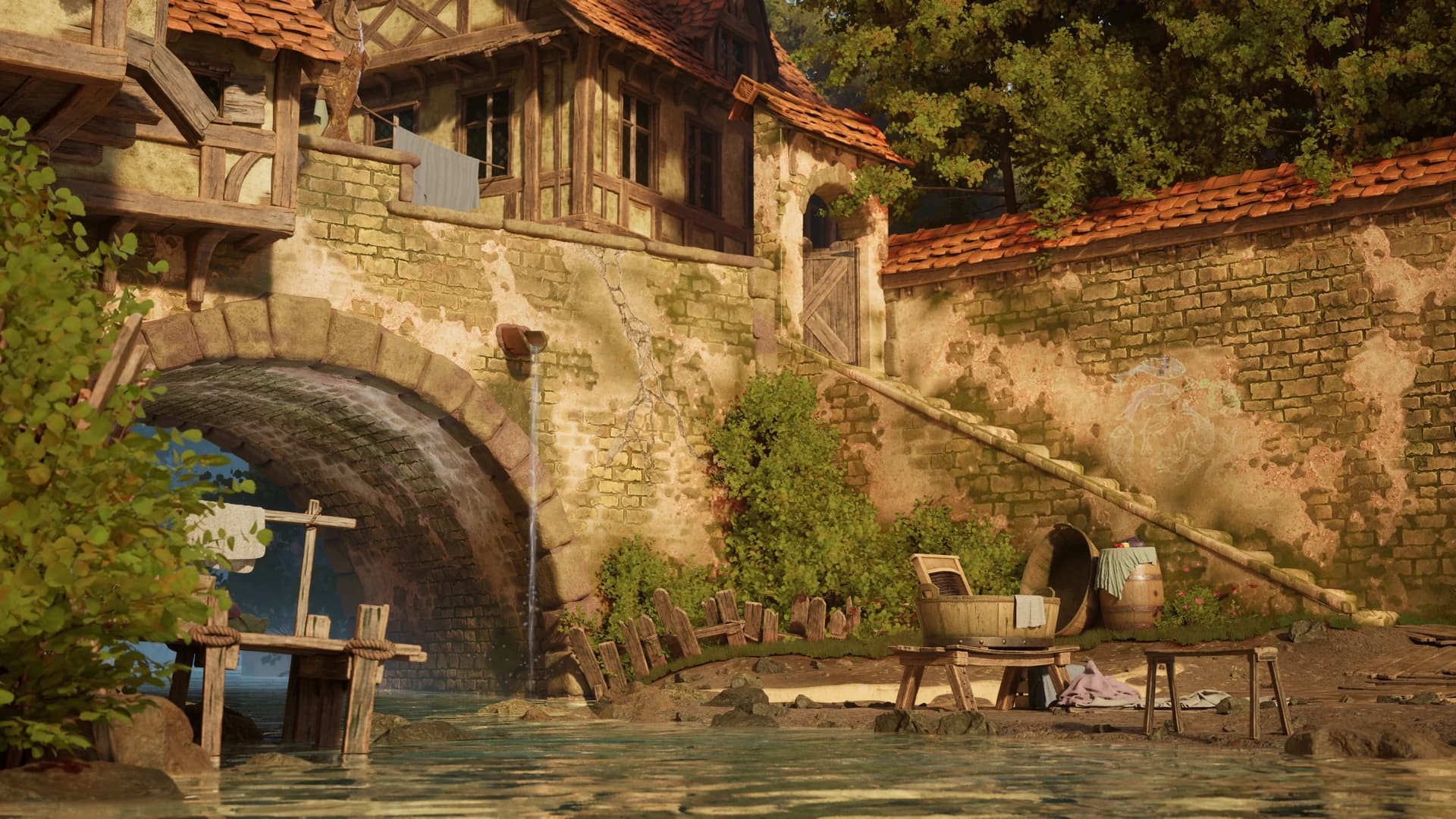
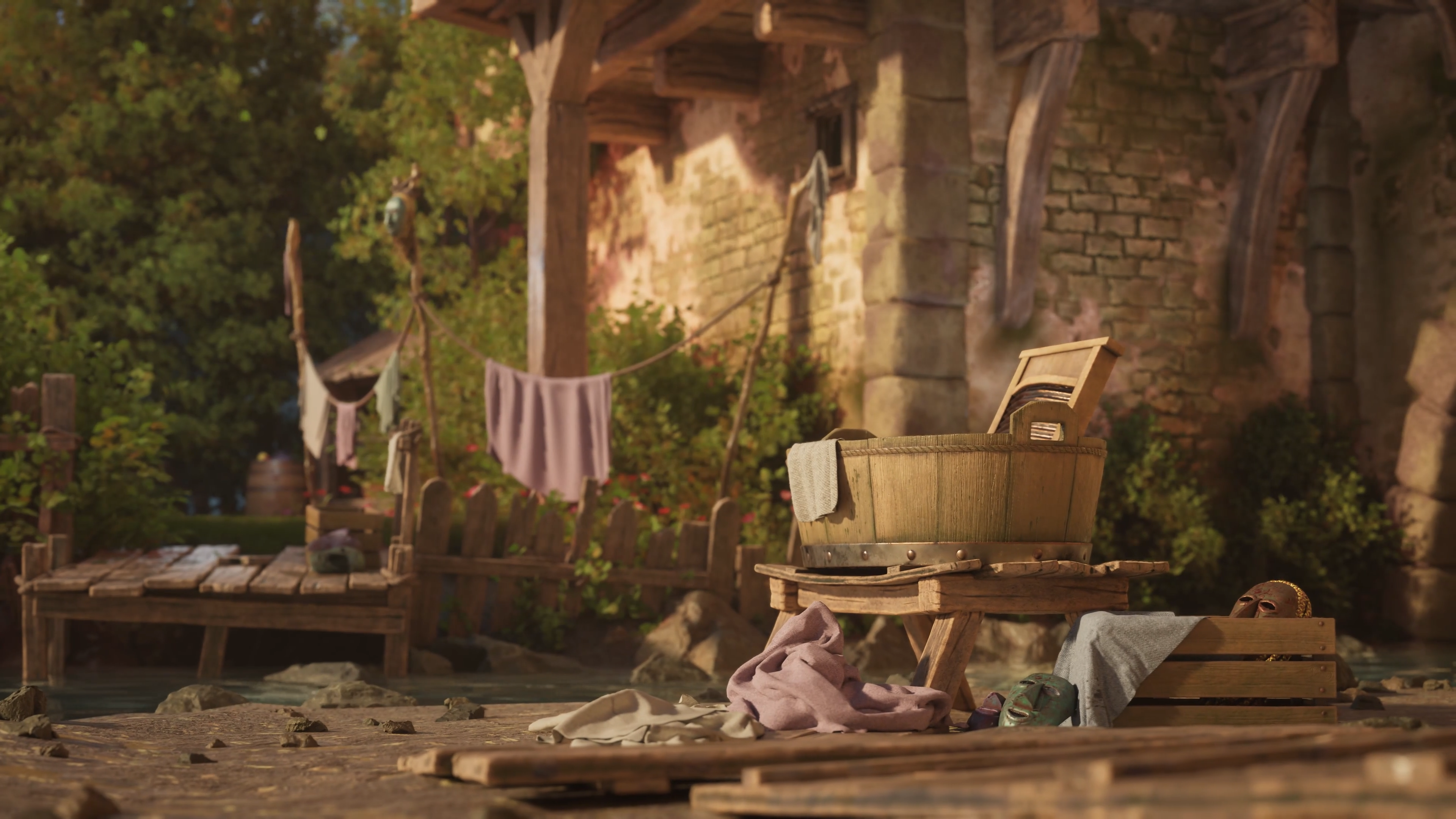
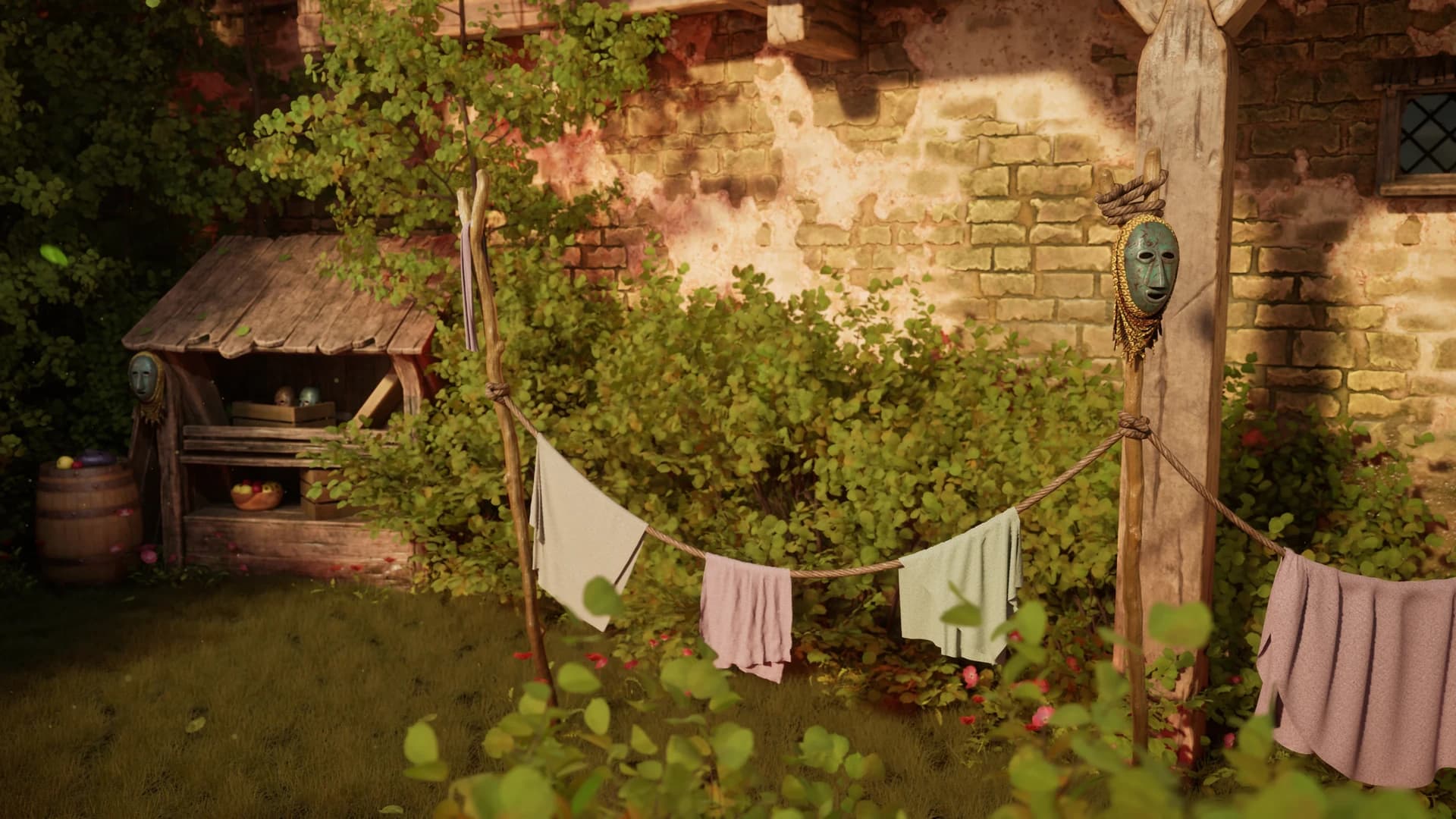
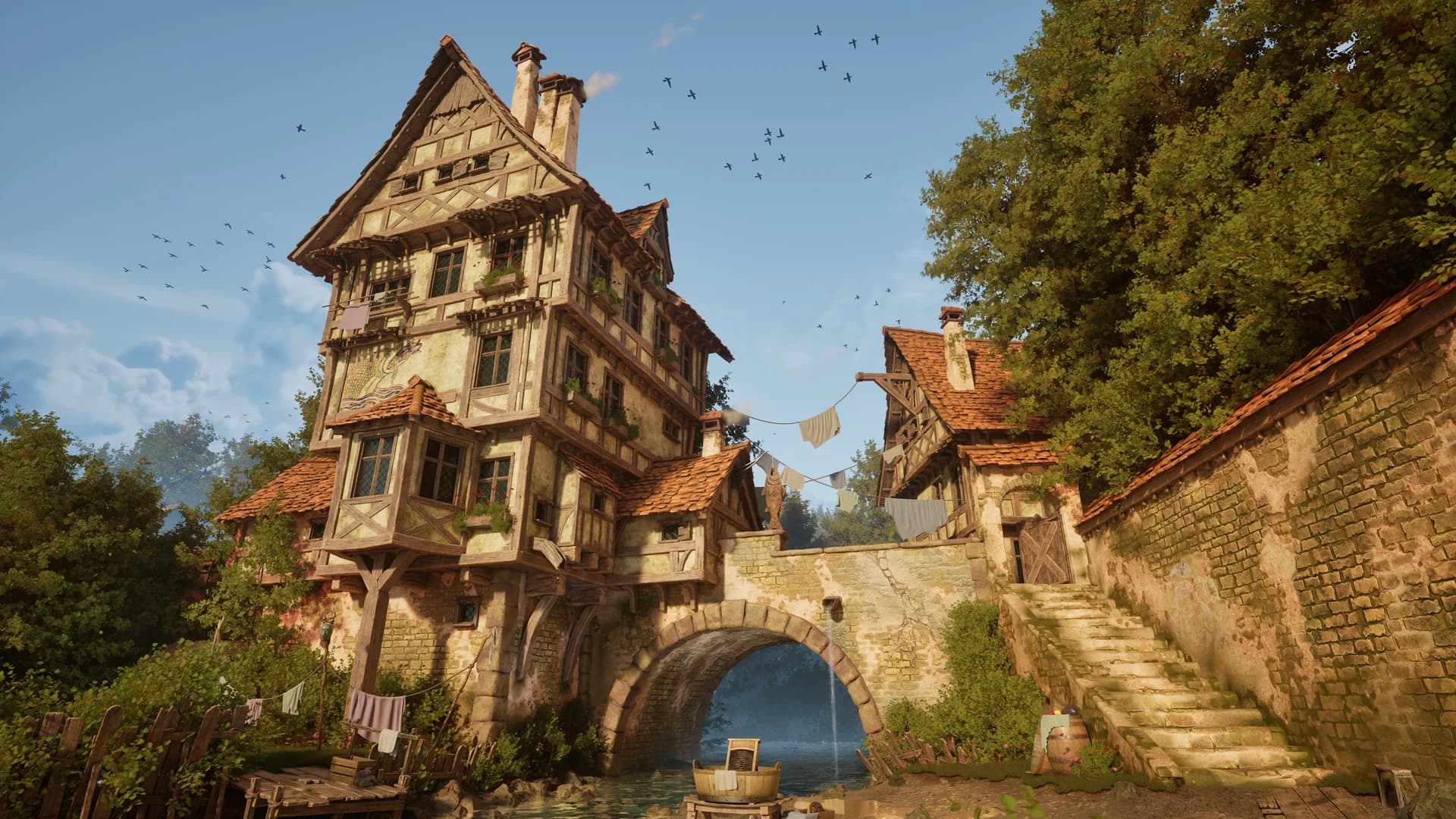
At first glance, the village appears idyllic. Laundry hangs between buildings, birds circle overhead and warm light settles across timber, stone and plaster. Look a little longer and the scene begins to suggest something less certain. Small narrative details hint at a more sinister story beneath the surface, allowing the environment to tell its story without stating it outright.
From painting to place
The painting became a foundation rather than a blueprint.
Its composition, architecture and atmosphere were reinterpreted as a space that could be explored from multiple viewpoints. The challenge was to retain the character of the original while giving the village enough depth, structure and detail to feel complete beyond a single frame.
Each decision returned to the same question: what lies just beyond the edge of the painting?
Atmosphere
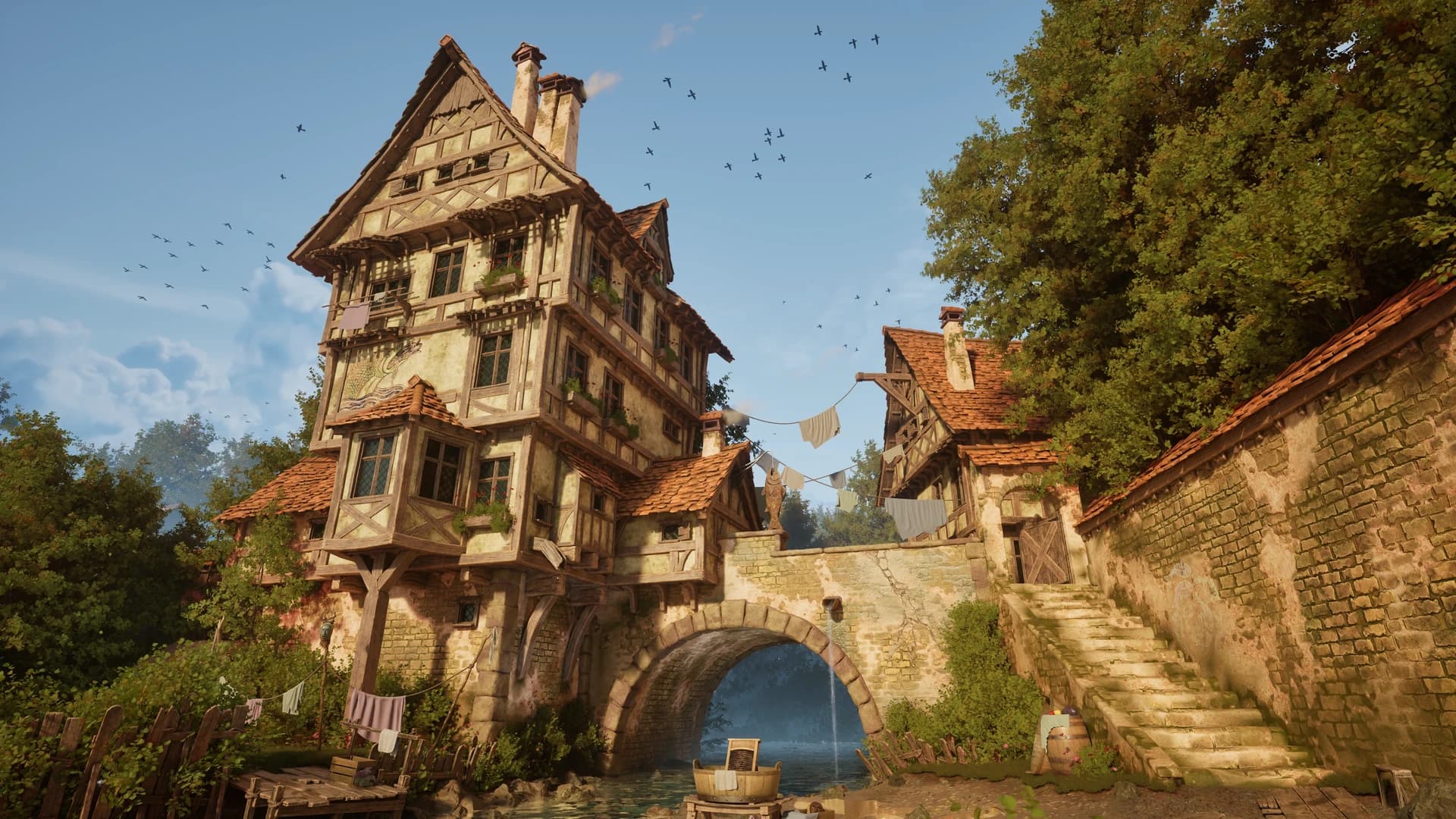
Light plays a central role throughout the project.
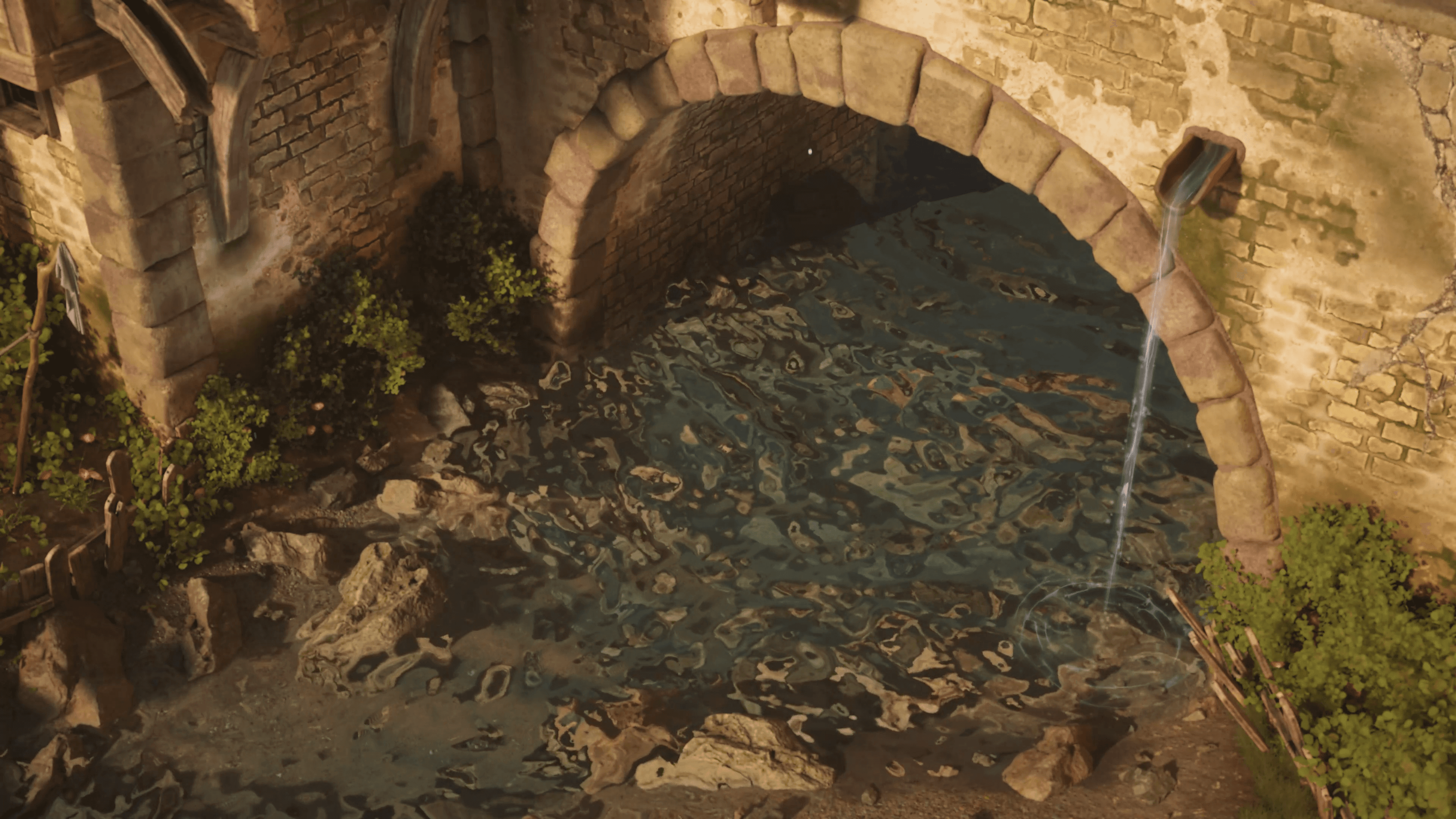
Warm daylight gives the village its sense of calm, while cooler shadows beneath bridges, archways and narrow passages introduce contrast and uncertainty. Weathered materials, foliage and signs of daily life build a place that feels occupied, even in the absence of people.
The stylisation remains restrained, drawing loosely on the mood and visual language of South of Midnight without losing the rural character of the original painting.

Storytelling
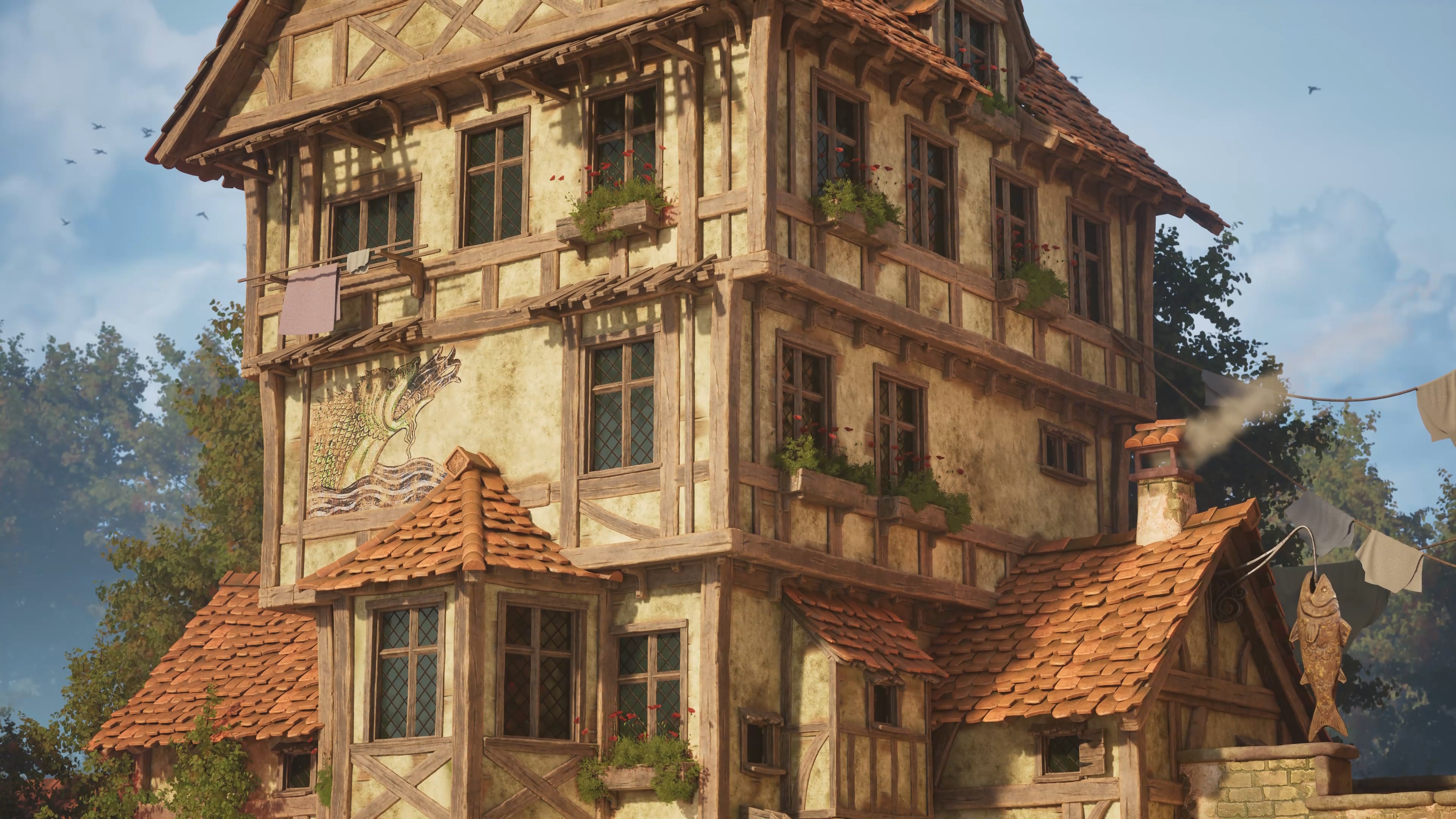
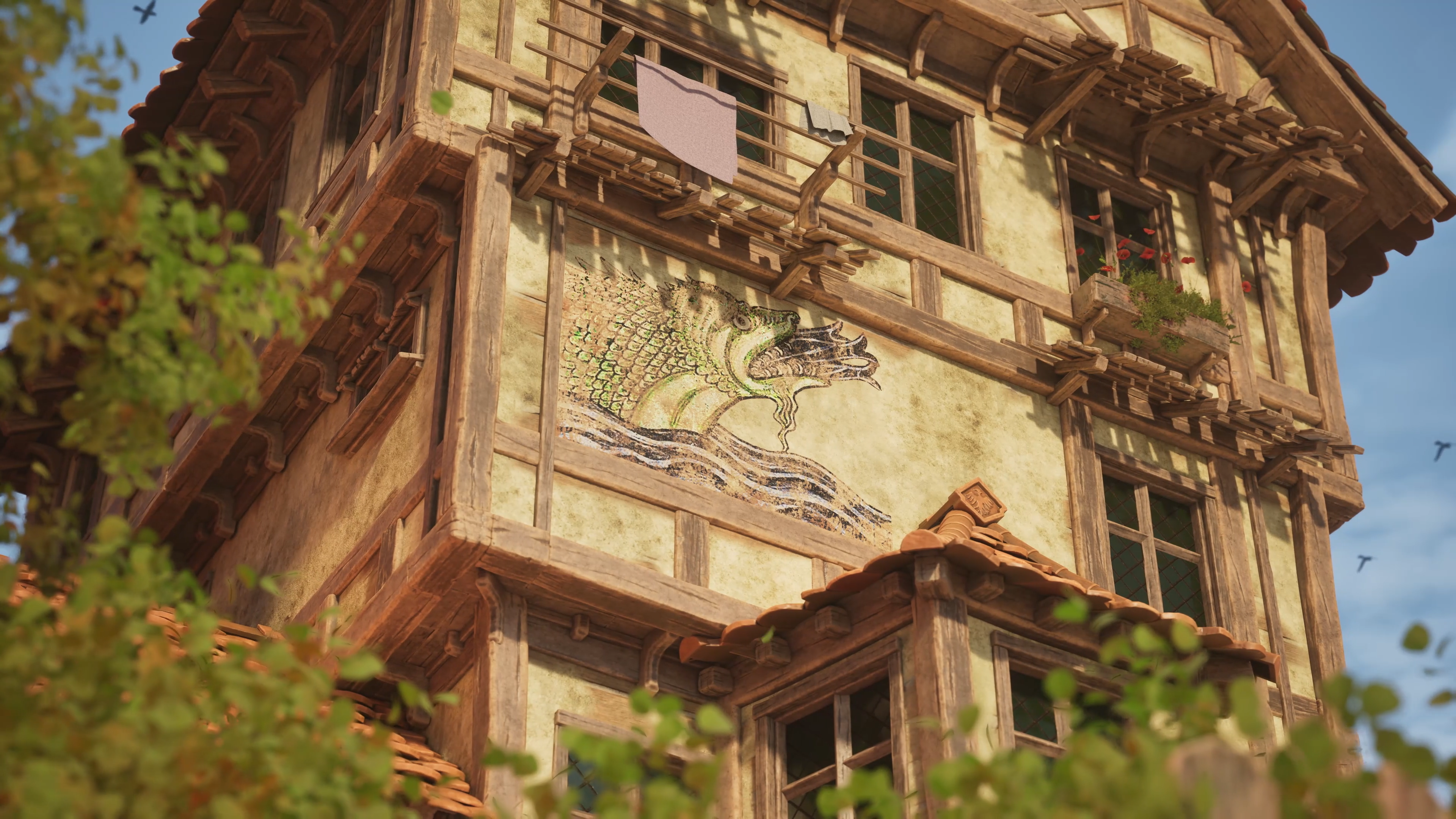
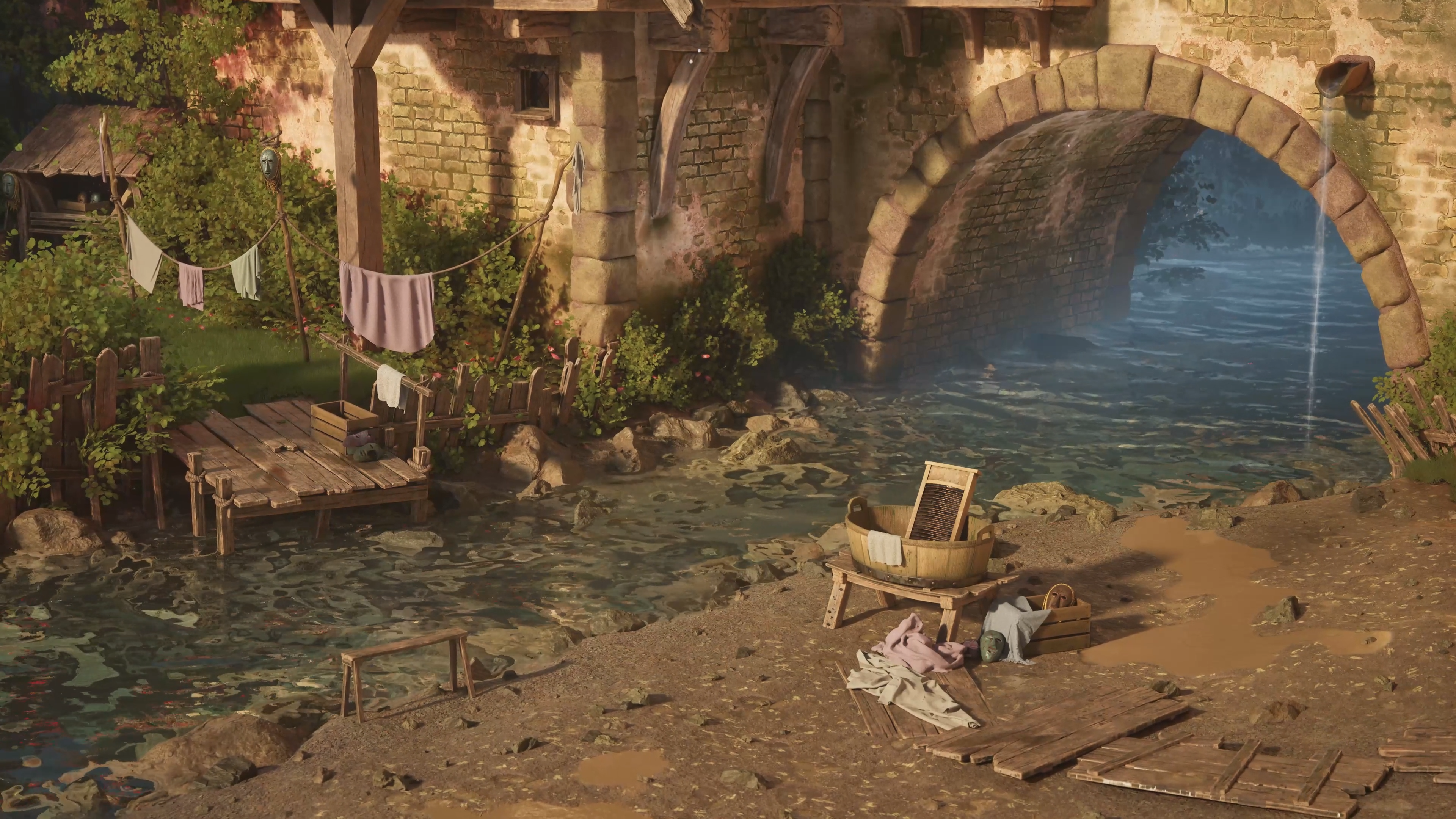
The environment is filled with evidence of ordinary life: drying clothes, open windows, worn pathways and well-used buildings.
Beneath that familiarity are smaller details that shift the mood. Nothing is made explicit. The scene leaves room for the viewer to decide whether the village is simply peaceful, or whether something else lingers beneath its surface.
Reflection
Working from a painting encouraged a different way of observing.
The process was less about reproducing the image exactly and more about understanding why it felt believable in the first place. Light, composition and everyday details became as important as architectural accuracy, helping a static image grow into a place with its own atmosphere and implied history.
Most assets were created specifically for the scene. A small selection of foliage models, decals, cloud textures, birds and props were sourced externally, with custom materials created for the foliage.